
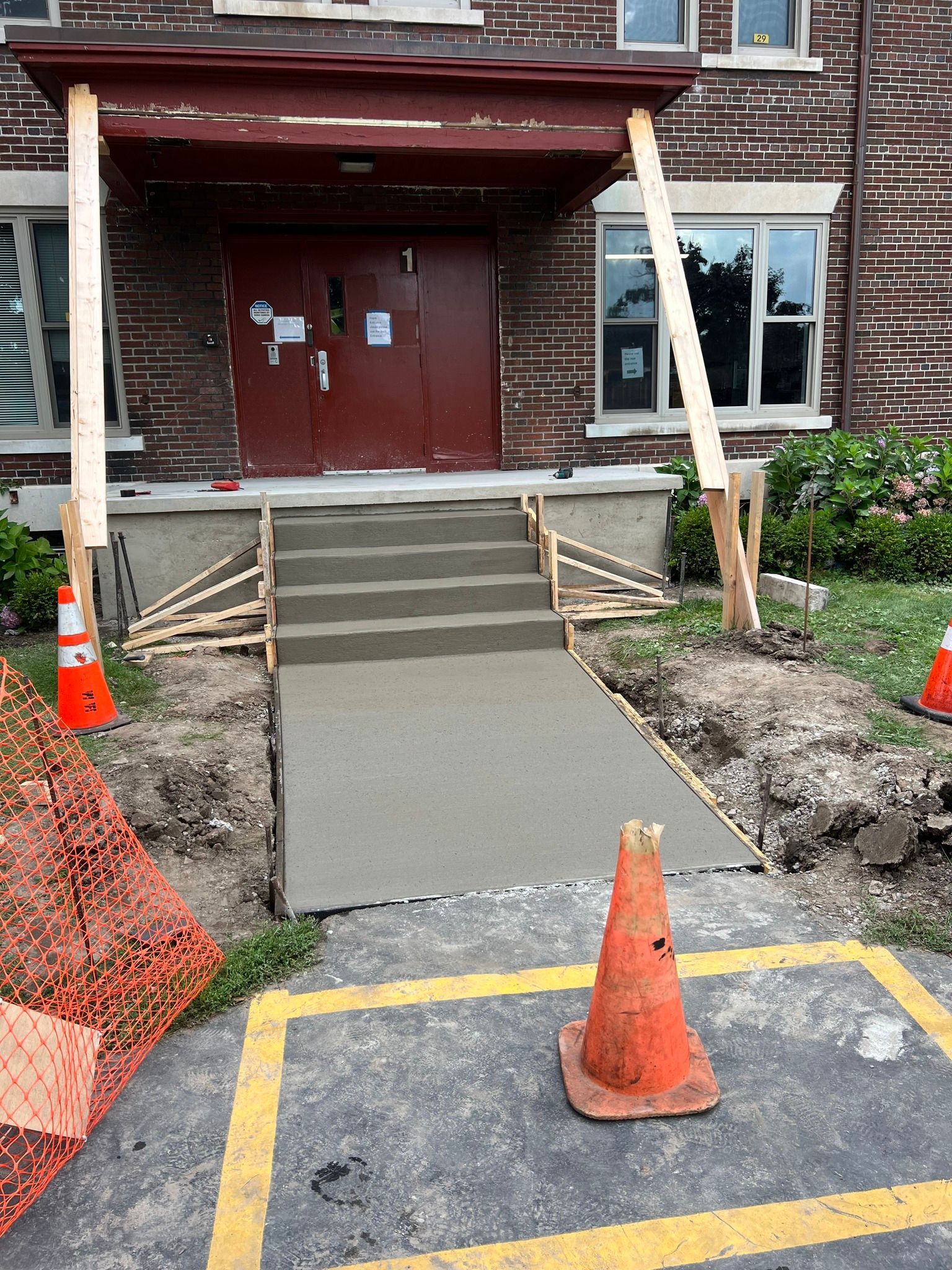
New Slabs That Address Settlement and Cracking
Concrete Installations in Clarence and surrounding areas for properties requiring new garage floors, walkways, and functional outdoor slabs
Xquisit Concrete LLC performs concrete installations across Clarence, Buffalo, West Seneca and surrounding areas, including garage floors, pole barn floors, driveways, patios, and walkways that require excavation, grading, and reinforcement to prevent future cracking or shifting. You may need a new slab if your existing concrete has settled unevenly, developed wide cracks that collect water, or no longer provides a level surface for parking or storage. Many older properties in Erie County have concrete that was poured without adequate base preparation, leading to visible deterioration after repeated freeze-thaw cycles.
Each installation begins with excavation to reach stable subgrade, followed by placement of compacted gravel base that provides drainage and distributes weight evenly across the slab. Forms are built to define the perimeter and elevation, and steel rebar or wire mesh is positioned to resist tension forces that cause cracking. The concrete is poured, screeded to grade, and finished with tools suited to the intended use, whether that means a smooth troweled surface for a garage floor or a broom finish for outdoor walkways.
If you are replacing an aging driveway or adding a new patio, contact Xquisit Concrete LLC to review site conditions and project requirements specific to your property layout.
How Proper Grading and Reinforcement Prevent Common Failures
You will see the crew establish string lines and grade stakes to control the final elevation and slope of the slab, ensuring that water drains away from structures and does not pool on the surface. The base material is spread in lifts and compacted with a plate tamper or roller to eliminate voids that would allow the concrete to settle unevenly once loaded. Reinforcement is tied or laid flat depending on slab thickness and expected load, and control joints are saw-cut or tooled into the surface to guide cracking along predetermined lines rather than allowing random fractures.
After curing, you will notice a level surface that no longer shifts when vehicles drive over it, eliminates standing water that used to freeze into ice patches, and provides stable footing for foot traffic or equipment storage. The slab remains in place because the base was compacted to the density required for the soil type and load conditions common in western New York.
New installations improve accessibility, safety, and property value, and can be tailored to accommodate multiple vehicles, outdoor furniture, or specialized equipment storage. This work does not include landscaping, site utilities, or structural modifications to existing buildings, and any necessary permits must be obtained before excavation begins.
Common Questions About New Concrete Slabs
Homeowners throughout Clarence and surrounding areas often ask about excavation depth, curing time, and how the slab will perform once the forms are removed and the site is restored.
What depth of excavation is required for a new garage floor?
Typically, you will see six to eight inches removed to allow for four inches of compacted base and four inches of concrete, though this varies with soil conditions and expected load.
How long does it take for a new slab to reach full strength?
Concrete reaches approximately 70 percent of its design strength in seven days and continues hardening for several weeks, so heavy loads should be avoided during the first week after placement.
Why is base compaction more important than concrete thickness?
A poorly compacted base will settle unevenly regardless of slab thickness, causing cracks and voids that cannot be repaired without removing and replacing the concrete.
When should control joints be cut into the surface?
Joints are typically saw-cut within 12 to 24 hours after finishing, while the concrete is firm enough to support the saw but still soft enough to cut cleanly without chipping.
What happens if it rains during the curing period in Clarence?
Light rain after the surface has been finished and covered will not harm the concrete, but heavy rain during placement or finishing can weaken the surface and require rework.
Xquisit Concrete LLC tailors each installation to the functional needs and site conditions of your property, whether that involves replacing a deteriorated driveway or pouring a new floor inside a pole barn. Call (716) 587-1121 to discuss excavation, grading, and scheduling for your next concrete project.